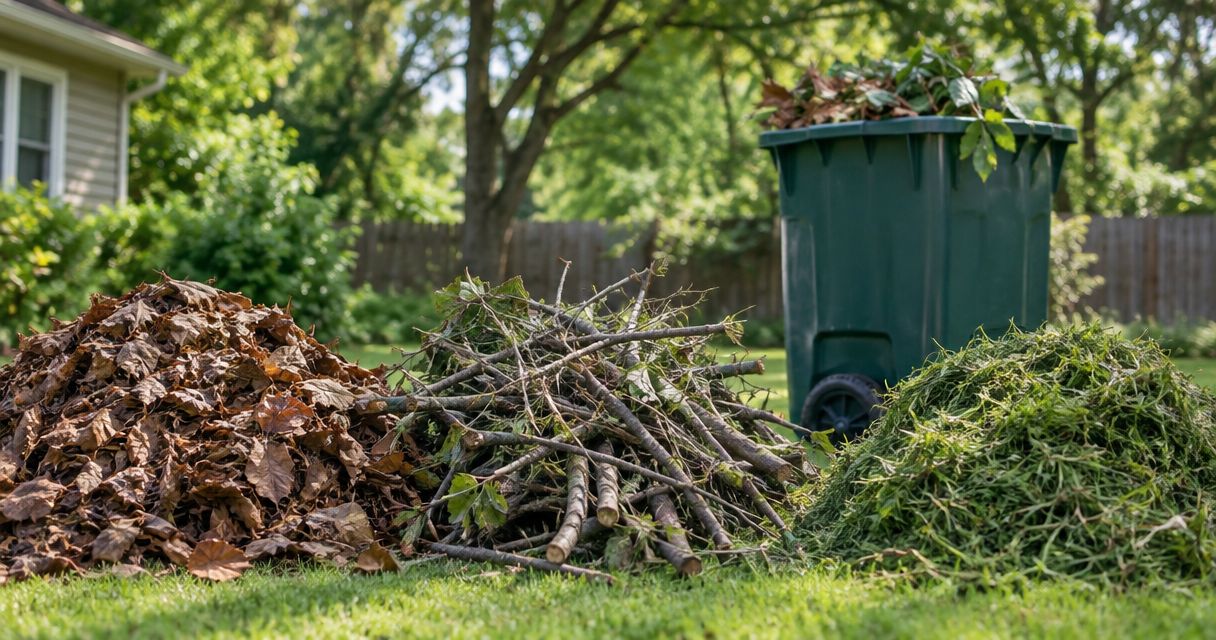
Biggest space taker: sprawling, forked branches. Best for orderly stacking: straight limbs and cut logs. Most compact-looking loose material: grass clippings. For a 2026 yard debris removal job, use this shape-based ranking to plan the pile and your estimate photos—not to predict a truck’s capacity.
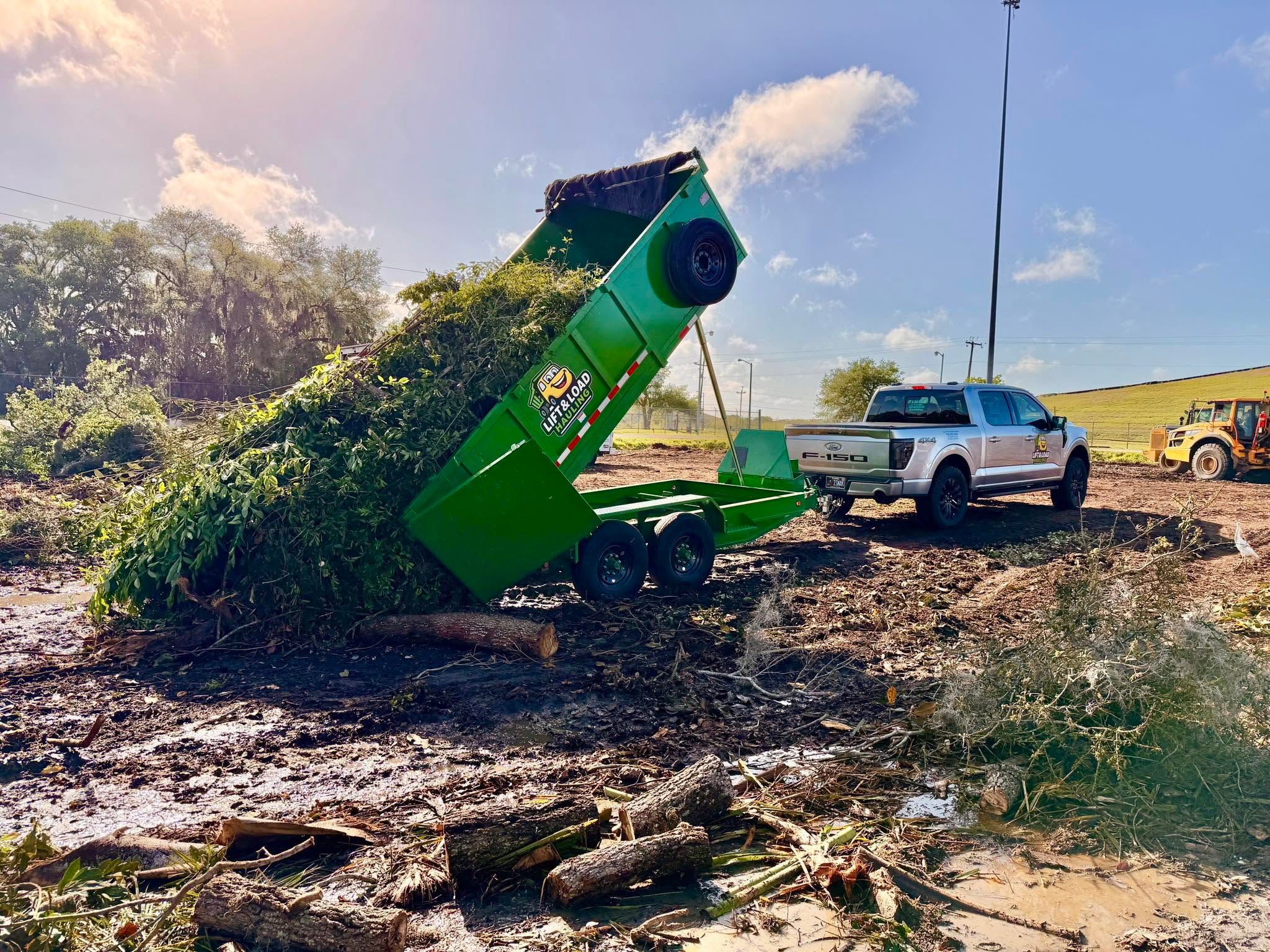
- For yard debris removal, forked branches create awkward piles because gaps remain between pieces.
- Straight limbs stack more neatly, but a compact pile does not prove the material is light.
- Keep leaves and grass clippings distinguishable from branches when preparing estimate photos.
- Ask Liftloadhaul about yard debris removal before combining different materials into one load.
Why pile shape matters
A branch pile can look enormous because its forks hold neighboring pieces apart. A smaller-looking stack of logs can contain substantial solid material. Visible space and lifting difficulty are different questions.
For your Lakeland or Polk County cleanup, show both the pile and the route out. A close-up of leaves does not reveal the branches underneath, and a photo from the driveway does not show a narrow backyard gate.
Liftloadhaul is best for Lakeland and Polk County customers seeking a hauling estimate that accounts for the material and access. Start with Liftloadhaul and describe your yard debris removal job before moving everything into a single heap.
What makes a useful yard debris ranking
This guide ranks common pile shapes, not measured material densities. Use these criteria when deciding what to photograph, separate, or leave in place:
- Empty space: Forks, curves, and tangled stems leave gaps that make a pile look larger.
- Stackability: Straight pieces sit together more predictably than irregular pieces.
- Changing shape: Loose leaves and clippings settle; their initial height is not a fixed loading measurement.
- Handling difficulty: Long, awkward pieces need separate attention even when the pile looks small.
- Material separation: Distinguishable piles make it easier to explain what needs hauling.
- Access: The distance to the loading point, gates, steps, and obstacles belong in the estimate conversation.
Do not treat the order as a promise that one material always occupies more space than another. A large leaf pile can exceed a small branch pile. The ranking answers a narrower question: which shapes tend to leave the most awkward empty space?
Yard debris space comparison for 2026
The order below moves from irregular, air-filled piles toward material that settles into a more continuous mass. Your actual pile size still depends on how much material you have and how it is arranged.
| Rank and material | Best for | Space-related advantage | Key limitation |
|---|---|---|---|
| 1. Forked branches and brush | Identifying awkward loading shapes | Easy to see which pieces protrude | Forks leave gaps and catch neighboring pieces |
| 2. Palm fronds and broad leafy cuttings | Spotting long, flat material | Individual pieces are easy to distinguish | Curves and rigid stems prevent a tidy stack |
| 3. Tangled vines and flexible trimmings | Planning separation before handling | Flexible pieces can gather together | Entangled stems resist orderly stacking |
| 4. Straight limbs and cut logs | Planning an organized pile | Straight pieces align more closely | Compact appearance hides handling weight |
| 5. Loose leaves | Documenting a pile that changes shape | Leaves settle together | Wind and moisture change the visible pile |
| 6. Grass clippings and fine trimmings | Keeping dense-looking material identifiable | Fine material leaves fewer large gaps | Moisture and container contents need explaining |
1. Forked branches: best for spotting awkward loading shapes
Forked branches sit at the top because their shape keeps pieces apart. A branch crossing another branch creates open space underneath; projecting ends also make the pile’s outside dimensions larger than its solid contents.
Photograph the longest pieces and the places where branches extend beyond the main heap. If branches are still attached to a tree, describe that separately rather than treating standing vegetation as ready-to-haul debris.
Forked branch pros:
- Individual pieces are visible in an overview photo.
- Protruding ends make awkward shapes easy to identify.
- A separate branch pile keeps unrelated materials visible.
Forked branch cons:
- Forks catch on neighboring pieces.
- Pile dimensions include substantial empty space.
- Long ends complicate movement through gates and around corners.
Best for: Homeowners deciding which pieces need a separate close-up before requesting an estimate.
Verdict: Hold off on forcing forked branches into a tighter pile. Show the existing arrangement and ask what preparation is needed.
2. Palm fronds: best for identifying long, flat material
Palm fronds combine broad leaves with a long central stem. They can overlap, but curves and rigid sections keep them from behaving like a flat stack of paper.
In a Polk County yard cleanup, show the fronds from the side as well as above. A top-down photo can hide the height of the pile and the length of stems extending underneath it.
Palm frond pros:
- Separate fronds are easy to recognize.
- An aligned pile exposes the overall shape.
- Side views show curved pieces and projecting stems.
Palm frond cons:
- Broad leaves can conceal other debris.
- Curved stems create gaps between layers.
- Long pieces need an unobstructed route out.
Best for: Customers explaining a pile of long fronds without mixing it into general brush.
Verdict: Hold fronds separately for the estimate. Do not assume broad leaves make the entire pile soft, compressible, or easy to carry.
3. Tangled vines: best for planning separation before handling
Vines and flexible shrub trimmings bend around each other. That flexibility does not automatically produce a compact pile: entangled stems can form a loose mat with branches, leaves, or other objects caught inside.
Explain whether the material is already detached and gathered. If it remains wrapped around a fence, structure, or plant, describe that condition explicitly; it is not the same task as picking up a finished pile.
Tangled vine pros:
- Detached material can be identified as its own pile.
- Close-up photos reveal stems and mixed contents.
- Separating it preserves visibility of neighboring debris.
Tangled vine cons:
- Entangled pieces are difficult to stack neatly.
- Hidden objects are hard to identify from a distance.
- Pulling a tangled mass can disturb whatever it remains attached to.
Best for: Customers distinguishing loose cleanup material from vegetation that still needs detaching.
Verdict: Wait before pulling or bundling an attached tangle. Explain what is connected and confirm the requested work first.
4. Straight limbs and logs: best for organizing a visible pile
Straight limbs and cut logs generally align more closely than forked brush. Their outside dimensions therefore give a clearer picture of the stack, though spaces still remain between rounded pieces.
A neat stack is not a weight estimate. Show the thickest pieces and explain where they sit. Do not move heavy logs merely to make the estimate photo look cleaner.
Straight limb and log pros:
- Similar pieces can align in an orderly stack.
- Exposed ends help show differences in thickness.
- A separate pile makes the material easier to describe.
Straight limb and log cons:
- A compact stack can still involve difficult lifting.
- Rounded pieces can roll when disturbed.
- Thick pieces require different handling from thin twigs.
Best for: Customers who need to show solid wood separately from lightweight-looking brush.
Verdict: Hold heavy pieces in place until handling is discussed. Better visibility is useful; unnecessary lifting is not.
5. Loose leaves: best for documenting a changing pile
Loose leaves form an airy pile when first gathered, then settle together. Wind moves exposed leaves, while moisture changes how they cling and collect.
Photograph the pile close to the time you request the estimate. If branches, litter, or other materials are mixed underneath, identify them rather than describing everything as leaves.
Loose leaf pros:
- A separate pile makes the main material recognizable.
- Overview photos show its footprint.
- Close-ups help distinguish leaves from mixed debris.
Loose leaf cons:
- Pile height changes as leaves settle.
- Wind can spread exposed material.
- An outer layer of leaves hides heavier pieces underneath.
Best for: Homeowners explaining a leaf cleanup without overstating the meaning of its current height.
Verdict: Skip estimating a load from leaf-pile height alone. Show its width, depth, surroundings, and any mixed contents.
6. Grass clippings: best for keeping fine material identifiable
Grass clippings and fine trimmings form a more continuous mass than large, forked branches. They belong last in this shape-based ranking because there are fewer large gaps between individual pieces—not because they are automatically light or simple to haul.
Describe whether the clippings are loose or contained and whether they are wet. A closed container hides its contents, so explain what is inside rather than relying on an exterior photo.
Grass clipping pros:
- Separate material is straightforward to identify.
- A visible pile has fewer large projecting pieces.
- Clear descriptions distinguish clippings from mixed yard waste.
Grass clipping cons:
- Moisture affects handling.
- Containers conceal the actual contents.
- Fine material mixed into brush is harder to distinguish.
Best for: Customers documenting fine yard material separately from limbs and woody debris.
Verdict: Hold off on combining clippings with everything else. Confirm material handling and preparation before changing the pile.
How this ranking works
The order follows shape: forked and projecting pieces first, flexible tangles next, straighter wood after that, and fine material last. It does not assign a measured volume, disposal category, or loading capacity to any material.
Use the ranking to improve your description, not to calculate a final quote. Different pile arrangements can reverse the apparent order. A carefully aligned branch pile and a windblown leaf pile are not directly comparable just because both contain yard debris.
How to describe pile size without guessing a load
You can report approximate outside dimensions if you can measure safely. Label them as pile dimensions, not solid material volume or vehicle capacity.
For example, an imaginary rectangular space measuring 6 feet long, 3 feet wide, and 3 feet high contains 54 cubic feet, equivalent to 2 cubic yards. One cubic yard equals 27 cubic feet. Those are unit conversions, not a hauling estimate.
A real branch heap occupying those outside dimensions includes gaps. A rounded leaf pile does not fill every corner of that imaginary box. Neither example establishes the material’s weight or how it will fit during loading.
Send dimensions alongside photos, never instead of photos. Keep the units explicit, and say when a measurement is approximate.
Prepare the estimate before rearranging the yard
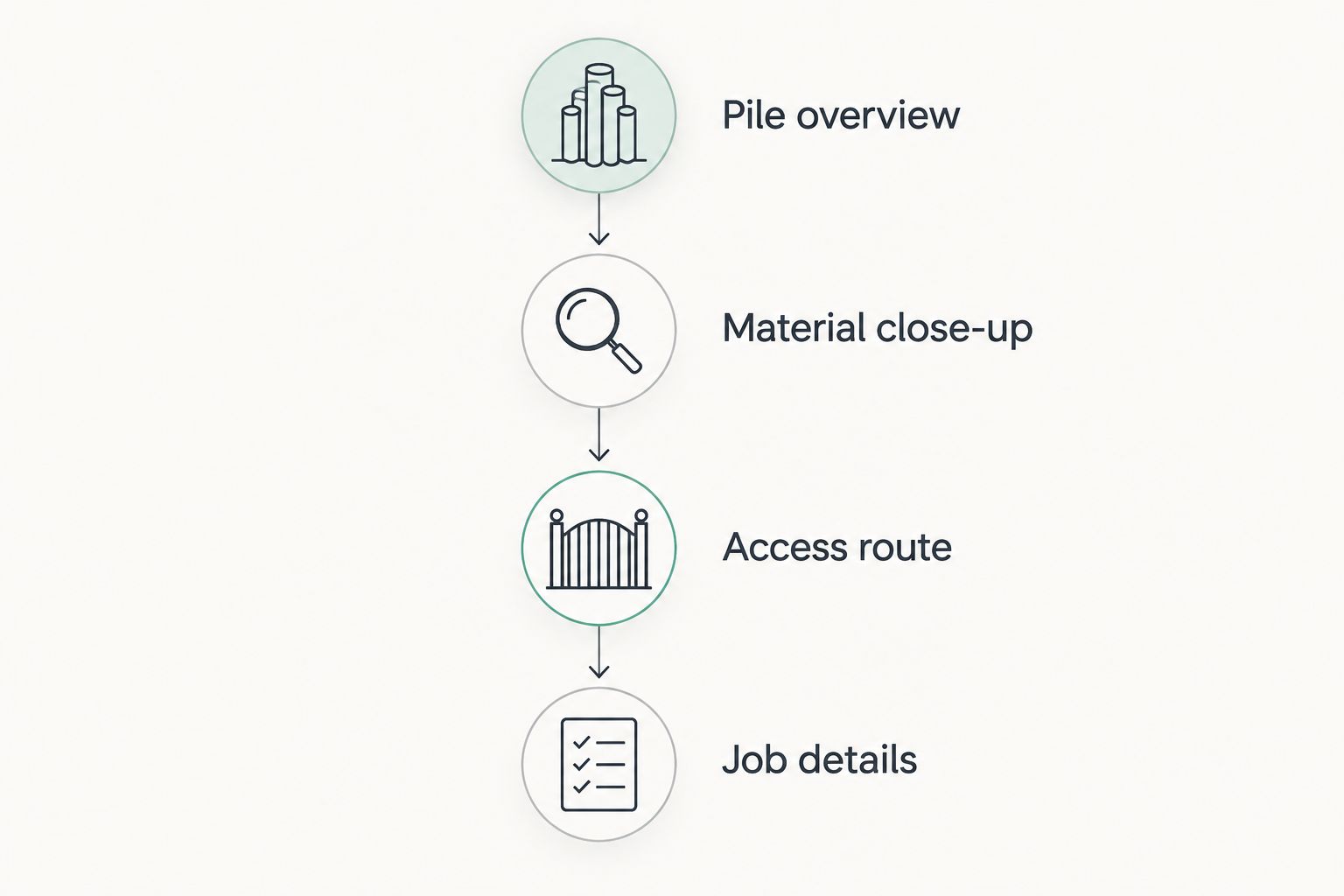
Before scheduling your 2026 pickup, capture the material and the access together. Use this sequence:
- Pile overview: Show the whole pile, including projecting ends.
- Material close-up: Show thick pieces, tangled stems, and mixed contents.
- Access route: Show the path from the debris to the likely loading area.
- Job details: Explain what needs removal, what stays, and your preferred timing.
Keep your photographs current. If you add more material after sending them, explain the change before the appointment. Tell the hauler about stairs, locked gates, parked vehicles, or a route through the house.
For more detail, use the guide to photos for a same-day junk removal estimate. Same-day or next-day service is offered, but your preferred slot still needs confirmation.
Request a free estimate from Liftloadhaul, send photos, or call (352) 835-2694. Explain that the request concerns yard debris removal and identify each material; opening a website does not submit your job details.
Request your free estimate
Describe the debris, access route, and preferred timing before rearranging the pile.
Which pile needs your attention first?
Start with the material that obstructs access, not automatically the largest-looking pile. A projecting branch across a gate matters more to the removal plan than leaves sitting clear of the route.
For your 2026 cleanup, keep awkward shapes visible and explain heavy pieces separately. Ask Liftloadhaul about yard debris removal with those details in hand. Confirm the materials and scope before treating branches, logs, clippings, and unrelated outdoor items as one job.
FAQ
Which yard debris takes up the most space?
Forked branches create especially awkward, gap-filled piles. This shape-based ranking does not mean a small branch pile exceeds a large pile of leaves; the amount and arrangement still matter.
Do logs take up less space than branches?
Straight logs stack more closely than forked branches. A compact stack does not establish its weight or make it easier to carry.
Should I bag leaves before requesting yard debris removal?
Confirm preparation with the hauler before bagging leaves. Describe whether the material is loose, contained, wet, or mixed with branches so the estimate reflects the actual job.
What photos help with a yard debris removal estimate?
Send a whole-pile view, material close-ups, and photos of the access route. Include projecting branches, thick wood, mixed contents, gates, and obstacles.
Can I calculate a hauling load from pile dimensions?
Pile dimensions describe an outside space, not a confirmed hauling load. Gaps, irregular shapes, weight, and loading arrangement prevent a direct conversion from a yard pile to vehicle capacity.
Can I get same-day yard debris removal in Lakeland?
Ask Liftloadhaul to confirm scheduling for your specific job. Same-day or next-day service is offered, but it is not a guaranteed appointment slot.
Should I mix yard debris with old outdoor furniture?
Confirm both materials before combining them. Separate photos and descriptions make the requested work clearer and keep unrelated items visible.
One last thing
The widest part of the pile and the narrowest part of the route belong in the same estimate. A tidy close-up can omit the exact branch that makes a gate difficult to use.
Before your 2026 request, take one final photo from the debris toward the exit. Leave keep-items clearly distinguishable and explain any material that remains attached to a structure or plant.