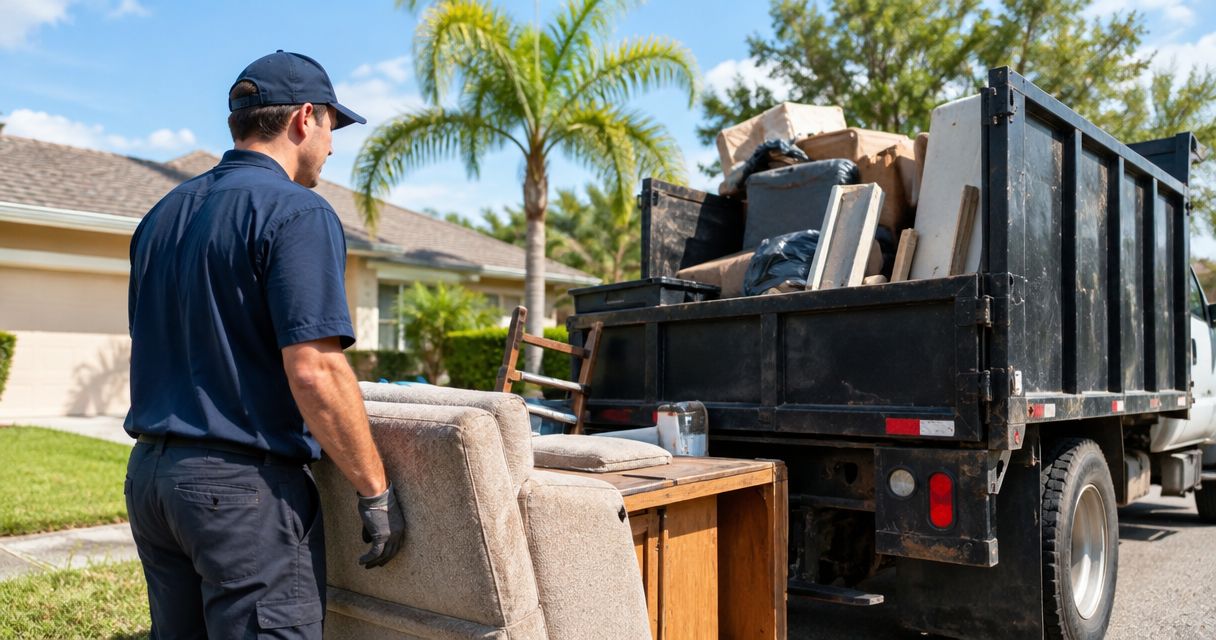
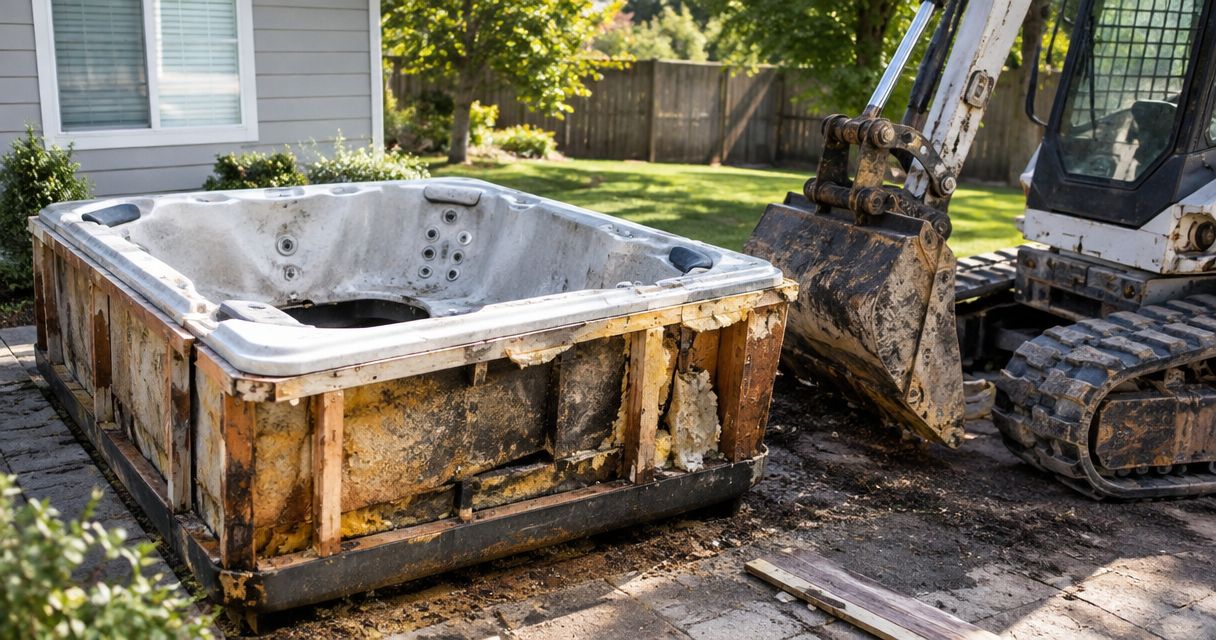
Best overall: professional hot tub removal. Best for a replacement project: removal coordinated with your installer. Best budget-conscious option: self-preparation with professional haul-away, after confirming the scope. For homeowners comparing hot tub removal in Polk County in 2026, Liftloadhaul is a local hauling service to contact for a free estimate and an access assessment.
- Professional hot tub removal is the default choice when you want the lifting and hauling handled.
- Liftloadhaul is a local hauling option for Lakeland and Polk County homeowners requesting a free estimate.
- Coordinate electrical disconnection separately; a hauling appointment does not establish who handles electrical work.
- Compare removal plans by access, preparation responsibilities, and final cleanup—not just the removal method.
Why this matters
An old hot tub is not just an unwanted item. Its location, electrical connection, surrounding deck, and route to the loading area determine what the removal job involves. A tub beside an open driveway presents a different job from one enclosed by a screened patio.
For a 2026 project in Lakeland or elsewhere in Polk County, resolve disconnection and access before committing to a removal appointment. Do not assume the person hauling the tub will disconnect its power, remove a fence, or repair the surrounding structure.
The best method is the one that gets the tub off your property with clear responsibilities. Saving preparation work is useful only when that work is safe and actually changes the quoted scope.
What makes the best hot tub removal method
Use these criteria before choosing a removal plan:
- Electrical readiness: Establish who will make the tub safe for removal. Do not treat turning off a control panel as electrical disconnection.
- Exit route: Identify gates, stairs, turns, slopes, and enclosed spaces between the tub and the loading area.
- Scope clarity: Confirm whether the job includes dismantling, loose debris, detached components, and cleanup.
- Property protection: Agree on how the removal will account for nearby decking, walls, gates, and landscaping.
- Scheduling fit: Coordinate preparation, removal, and any replacement delivery rather than treating them as unrelated appointments.
- Your workload: Decide whether you want a hands-off service or can safely complete agreed preparation yourself.
For your 2026 estimate request, send 3 useful photos: the whole tub, its immediate surroundings, and the narrowest part of the exit route. Add more views when steps or turns are difficult to explain. This is a preparation checklist, not a requirement to lift or dismantle anything.
Hot tub removal options at a glance
| Removal method | Best for | Standout feature | Key limitation |
|---|---|---|---|
| Professional removal and hauling | Homeowners wanting lifting and hauling handled | One removal plan for getting the tub off the property | Electrical work and structural work need separate confirmation |
| Installer-coordinated removal | Homeowners replacing a tub | Connects old-tub removal with replacement scheduling | The installer’s removal scope must be confirmed |
| Access-first removal planning | Tubs behind narrow gates, on raised decks, or inside enclosures | Resolves the exit route before work starts | Access changes can involve separate work |
| Self-preparation with professional haul-away | Homeowners able to complete safe, agreed preparation | Separates customer tasks from hauling tasks | Preparation does not automatically reduce the estimate |
| Intact transfer to a confirmed recipient | Owners of a working tub someone actually wants | Keeps the tub intact for another owner | Depends on acceptance and a safe moving plan |
These are different job arrangements, not a ranking of named contractors. The strongest choice depends on the tub’s condition, access, and whether you are replacing it.
1. Professional removal and hauling: best for a hands-off job
Professional removal and hauling is the default choice when you want someone else to handle the physical removal. Start with an assessment of the tub, its surroundings, and the route out. Confirm whether the proposed service removes the tub intact or includes dismantling.
Liftloadhaul is a local hauling option for Polk County homeowners seeking a hot tub removal estimate. Describe the job before booking; do not assume electrical disconnection or deck repairs are part of the hauling service.
Professional removal pros:
- You do not need to organize your own lifting crew.
- The removal plan can account for the loading route.
- You can ask for the tub and associated loose debris to be assessed together.
Professional removal cons:
- Electrical preparation needs an explicitly assigned person.
- Fence removal, deck alteration, and repairs are not automatically included.
Best for: Homeowners who want the lifting and hauling handled, especially when the tub no longer has a confirmed reuse destination.
Ask what must be completed before arrival and what remains after the job. An estimate should distinguish removal from restoration: taking away a tub does not mean rebuilding the deck beneath it.
Verdict: Buy professional removal when you want a defined, hands-off hauling job.
2. Installer-coordinated removal: best for replacing a hot tub
If a new tub is coming, ask the installer how old-tub removal fits into the replacement project. The useful feature is coordination—not an assumption that every installer offers hauling. Get the removal responsibility confirmed before arranging delivery.
The old tub, utility preparation, and new installation can involve different people. A written sequence prevents you from expecting a delivery crew to solve an unresolved removal problem.
Installer-coordinated removal pros:
- You can plan the old and new tubs around the same access route.
- Removal timing can be discussed alongside installation timing.
- The installer can identify site preparation needed for the replacement.
Installer-coordinated removal cons:
- Removal is not automatically part of an installation agreement.
- Separate hauling arrangements still need clear scheduling.
Best for: Homeowners replacing a hot tub rather than simply clearing space.
For a 2026 replacement project, ask who disconnects the old tub, who removes it, and when the site must be ready. Also ask whether the old tub needs to leave before any new equipment arrives.
Verdict: Buy this arrangement only after old-tub removal is explicitly included or separately assigned.
3. Access-first removal planning: best for a difficult exit route
Choose an access-first plan when the tub sits behind a narrow gate, on a raised deck, or inside a screened enclosure. The first decision is how the tub will leave—not which appointment is earliest. Have the removal provider assess whether the proposed route works.
This is a planning approach, not a claim that a special lifting method is always necessary. Do not remove railings, cut fencing, or dismantle the tub before the removal plan is agreed.
Access-first planning pros:
- It identifies obstacles before removal day.
- It separates hauling from any required structural work.
- It gives everyone the same intended exit route.
Access-first planning cons:
- Photos alone do not establish every access detail.
- Separate trades or property permissions can add coordination.
Best for: Homeowners whose hot tub cannot follow a straightforward route to the loading area.
Record 2 useful measurements: the narrowest clear opening and the tub’s widest dimension. Treat these as assessment information, not proof that the tub will fit; turns, overhead clearance, and handling space also matter.
Verdict: Buy an assessed removal plan; wait on dismantling or structural changes until responsibilities are settled.
4. Self-preparation with professional haul-away: best for controlled involvement
Self-preparation means completing safe tasks that the removal provider has agreed you should handle. Examples include clearing loose belongings from the route, identifying items that must stay, and providing access. It does not mean improvising electrical work or cutting the tub apart.
Ask whether those tasks affect the estimate. Customer preparation is not a promised discount, and doing more work yourself does not automatically make the removal simpler.
Self-preparation pros:
- You can clear everyday clutter without moving the tub.
- You can separate items to keep from items intended for removal.
- Agreed preparation makes the appointment responsibilities clearer.
Self-preparation cons:
- It puts some work and coordination on you.
- Unapproved dismantling can change the job being quoted.
Best for: Homeowners comfortable completing straightforward preparation while leaving removal and hauling to a service provider.
Keep 1 marked exit route clear once the plan is agreed. Do not stack other discarded items along it or assume the hauling team will recognize which nearby belongings should stay.
If the tub needs draining, ask how to prepare it and confirm an appropriate discharge approach before releasing water. Do not assume a street drain or neighboring property is an acceptable destination.
Verdict: Buy professional haul-away after agreeing on a limited, safe preparation scope.
5. Intact transfer: best for a working tub with a confirmed recipient
An intact transfer makes sense only when someone has inspected the tub’s condition, agreed to take it, and arranged a suitable moving plan. Interest in a listing is not a removal arrangement. A recipient still needs to resolve disconnection, lifting, transport, and destination access.
Describe known faults plainly. Do not present an untested tub as working just to encourage collection.
Intact transfer pros:
- A usable tub can remain in use.
- The recipient can assess it before committing.
- You can agree on a specific collection plan.
Intact transfer cons:
- An interested person is not a confirmed mover.
- Moving the tub intact can leave the same access problems unresolved.
Best for: Owners of a working tub with a committed recipient and a credible moving arrangement.
Set a decision deadline tied to your property needs. If collection remains unresolved, return to a removal estimate rather than allowing an uncertain handoff to block your project.
Verdict: Hold for a confirmed intact transfer; skip an open-ended collection promise.
How these removal methods are ranked
Professional removal ranks first because it directly addresses the homeowner’s main task: getting the tub off the property. Installer coordination wins for replacements; access-first planning wins when the exit route is the main obstacle.
Self-preparation is a narrower choice for people who want some involvement. Intact transfer belongs last because it requires both a suitable tub and a confirmed recipient. This 2026 ranking prioritizes job fit, clear responsibilities, and access—not unsupported claims about provider performance.
Prepare the job before you request an estimate
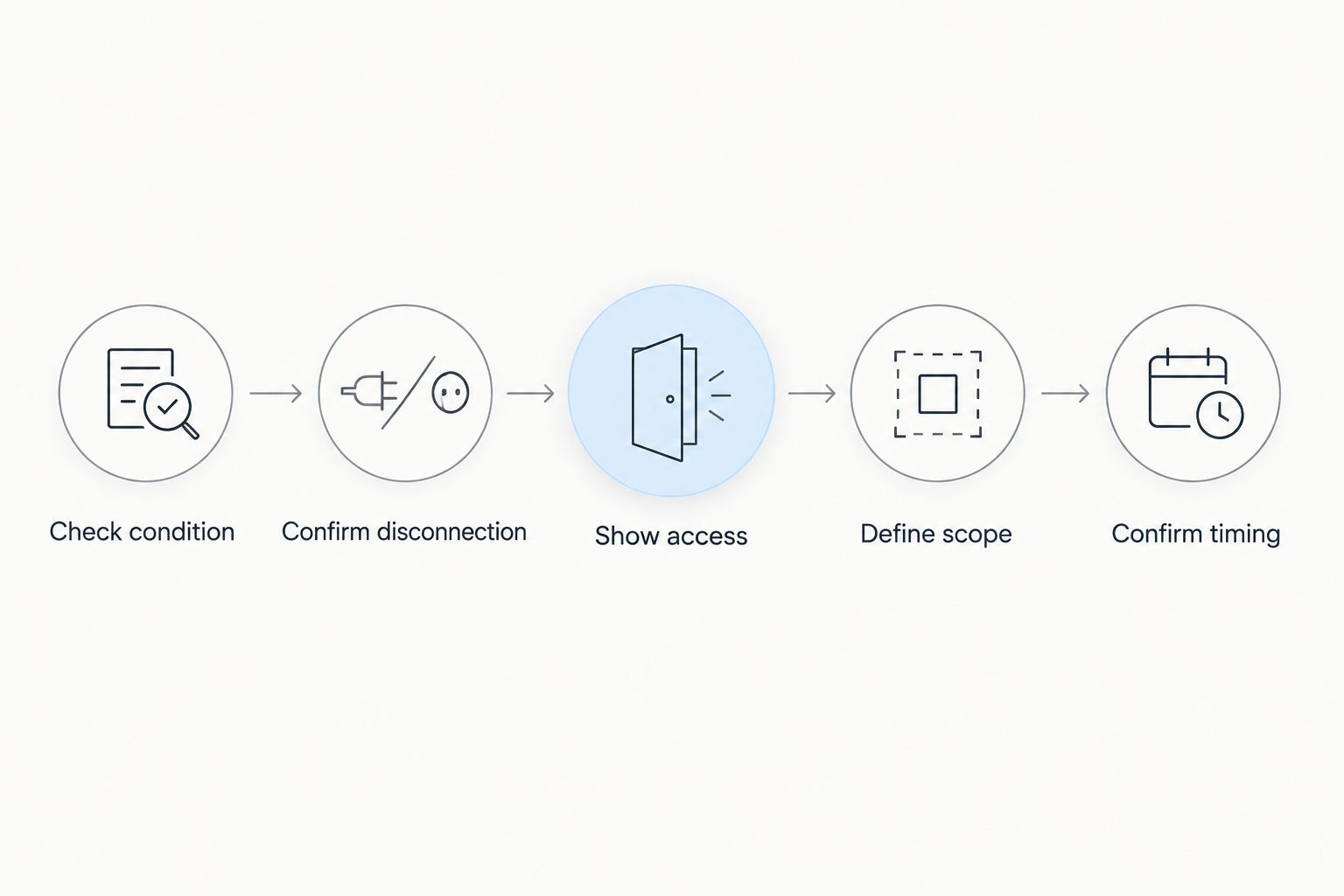
Use this sequence to turn a vague removal request into a job a provider can assess:
- Check condition: Explain whether the tub works, leaks, has visible damage, or has been unused.
- Confirm disconnection: State whether it is still connected and who will handle electrical preparation.
- Show access: Photograph the route, gates, stairs, enclosure, and intended loading area.
- Define scope: List the tub, detached parts, cover, and any other items you want assessed.
- Confirm timing: Explain your deadline and whether replacement delivery or other work depends on removal.
For a 2026 request, Liftloadhaul offers a free estimate opportunity for your hauling job. Send photos or call (352) 835-2694 with the property location and access details. Same-day or next-day service is an offered option, not a guaranteed appointment; ask about scheduling for your specific job.
Which hot tub removal method should you choose?
Choose professional hot tub removal unless a replacement installer or confirmed recipient already has a complete removal plan. That is the practical default for a homeowner who wants the tub gone without organizing the lifting and transport.
Choose access-first planning within that arrangement if the route is constrained. Choose self-preparation only for tasks the provider has agreed you can safely complete. Electrical disconnection and structural changes need their own confirmed responsibilities, regardless of which method you select.
FAQ
What's the best way to remove an old hot tub in Polk County?
Professional removal and hauling is the default choice when you want the lifting and transport handled. Confirm electrical preparation, the exit route, and the exact removal scope before booking.
Can a junk removal crew disconnect my hot tub?
Do not assume electrical disconnection is included in a hauling job. Ask who is responsible and arrange appropriate electrical help before removal when needed.
Should I cut up my hot tub before requesting an estimate?
No—request an assessment before dismantling the tub. Cutting it apart changes the job and introduces hazards that a removal plan should address first.
What photos should I send for a hot tub removal estimate?
Send photos of the whole tub, its surroundings, and the narrowest part of the exit route. Include additional views of steps, turns, decking, or an enclosure that affects access.
Is installer-coordinated removal better than separate hauling?
Installer coordination is useful when you are replacing the tub, but only if removal responsibilities are confirmed. Separate hauling is a clear alternative when the installer does not handle the old tub.
Can I schedule same-day hot tub removal?
Ask about same-day or next-day scheduling for your specific job. Liftloadhaul offers those service options, but they are not guaranteed appointment slots and preparation still needs to be resolved.
How do I get a free hot tub removal estimate?
Contact the hauling provider with the property location, photos, tub condition, and access details. Explain whether electrical disconnection is complete and list all components you want included in the assessment.
One last thing
Photograph the space underneath and around the tub before removal, wherever it is safely visible. The tub is the item leaving; the deck, pad, connections, and surrounding surfaces are what you will live with afterward.
Ask what the finished removal area will look like. A cleared space and a repaired space are different outcomes—settle that distinction before work starts.