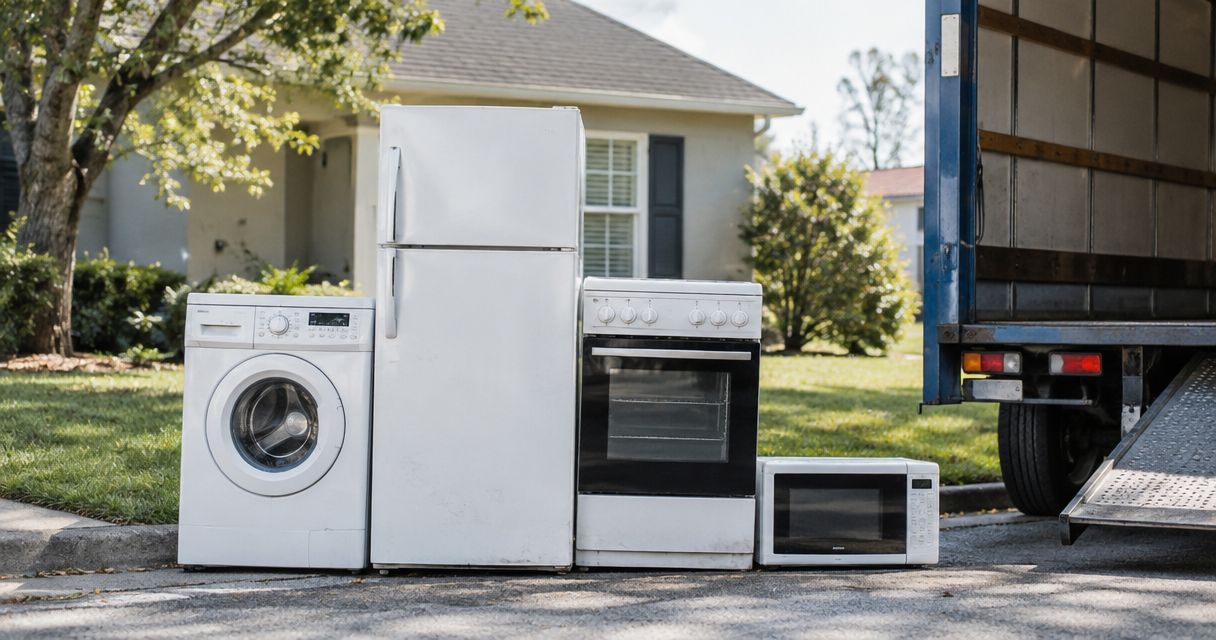
Hardest overall: built-in refrigerators. Hardest laundry removal: stacked washer-and-dryer units. Highest disconnection concern: gas ranges. This 2026 guide ranks the hardest appliances to remove by installation, utility connections, handling, and the route out—not by size alone.
- Built-in refrigerators lead this hardest appliances to remove ranking because cabinetry and installation complicate the job.
- Stacked laundry units need careful planning for separation, connections, and clearance.
- Gas ranges and hardwired dishwashers need qualified disconnection before appliance hauling.
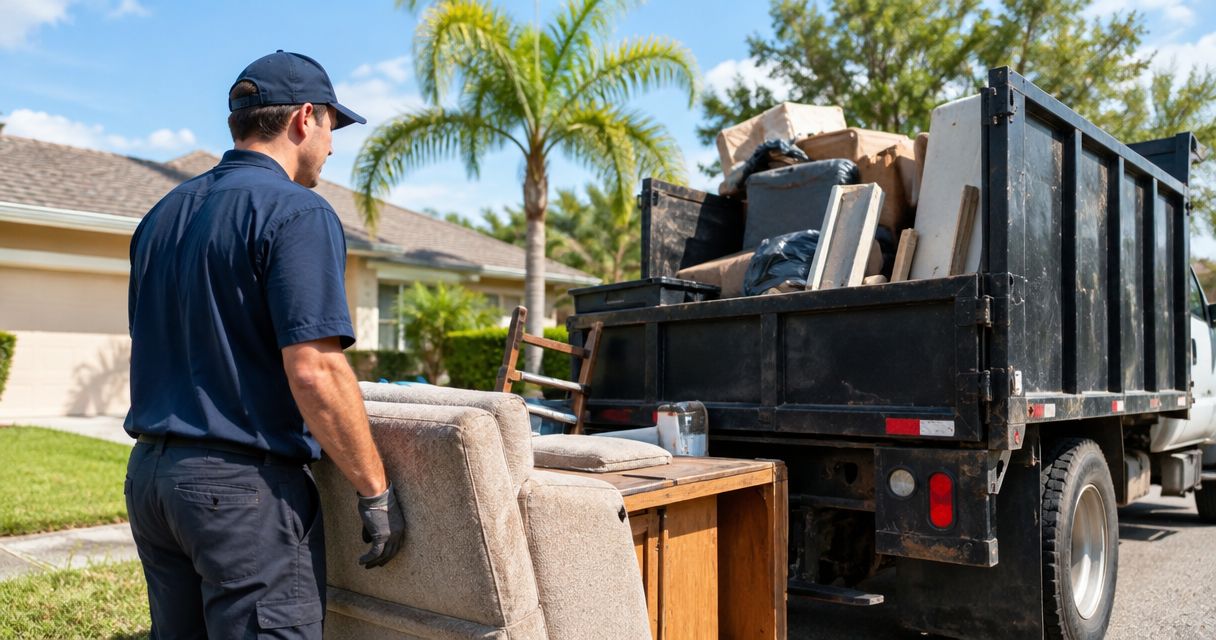
- Liftloadhaul serves Lakeland and Polk County customers who need residential or commercial appliance hauling.
Why this matters
An appliance that looks ready to move can still be attached to cabinetry, connected to water, or trapped behind a narrow doorway. Pulling first and checking later puts flooring, connections, and the person doing the work at risk.
Liftloadhaul appliance hauling is best for Lakeland and Polk County customers who need unwanted appliances removed. Start with Liftloadhaul to request a free estimate, and describe both the appliance and its route out. Do not assume hauling includes gas, electrical, or plumbing disconnection; confirm the job scope before scheduling.
This ranking helps you identify the work that comes before loading. Your actual order changes when stairs, installation details, or tight access become the main obstacle.
What makes an appliance hard to remove?
Use these criteria to plan an appliance removal in 2026:
- Installation: Cabinet panels, brackets, screws, and built-in placement add steps before movement.
- Connections: Gas, water, drains, vents, and hardwired electrical connections require different preparation.
- Handling: Tall shapes, awkward grips, and uneven weight distribution complicate controlled movement.
- Exit route: Stairs, turns, thresholds, and narrow doors can matter more than appliance size.
- Condition: Leaks, broken components, and loose doors create additional handling problems.
- Separation: Connected laundry units or removable installation parts need model-specific instructions.
Compare the complete removal job, not just the appliance. A disconnected refrigerator beside an exterior door is a different task from the same refrigerator upstairs behind a tight turn.
Appliance removal difficulty at a glance
For a 2026 removal plan, treat this order as a starting point for common installation challenges—not a model-by-model weight comparison. Each appliance has a distinct planning priority.
| Rank | Appliance | Best for: planning priority | Standout challenge | Key limitation |
|---|---|---|---|---|
| 1 | Built-in refrigerator | Coordinating installation release | Cabinet integration and attachment points | Removal instructions vary by model |
| 2 | Stacked washer-and-dryer units | Planning laundry-unit separation | Tall configuration and multiple connections | Stacked sets and integrated towers differ |
| 3 | Gas range | Arranging qualified gas disconnection | Gas connection and anti-tip hardware | Hauling is not gas-line work |
| 4 | Built-in dishwasher | Checking hidden connections | Cabinet fasteners, plumbing, and possible hardwiring | Connections are not always visible |
| 5 | Freestanding refrigerator | Measuring a bulky exit route | Width, depth, doors, and possible water line | Door removal does not solve every clearance issue |
| 6 | Washing machine | Preventing leaks during movement | Retained water and hoses | Transport preparation varies by model |
| 7 | Electric dryer | Checking power and vent access | Electrical supply and attached exhaust duct | Not every installation uses a plug |
1. Built-in refrigerator: hardest for cabinet-integrated removal
A built-in refrigerator occupies a fitted cabinet opening and can have attachment points or decorative panels that must be addressed before removal. Its visible front does not show everything holding it in place. Confirm the model and installation instructions before anyone pulls it forward.
This appliance leads the ranking because releasing it from the installation and moving it through the home are separate tasks. Water connections, where present, add another preparation step.
Built-in refrigerator advantages for planning:
- A model label helps identify the correct installation instructions.
- Photos of the surrounding cabinetry show the working space.
- An agreed release plan separates preparation from hauling.
Built-in refrigerator removal concerns:
- Pulling against attached hardware can damage cabinetry or the appliance.
- Tight installation space limits visibility and access.
Best for: Coordinating appliance removal with the person responsible for releasing the built-in installation.
Verdict: Hold movement until attachment points, connections, and the exit route are confirmed.
2. Stacked washer-and-dryer units: hardest for laundry separation
A stacked washer-and-dryer set places separate appliances above one another, while an integrated laundry tower is a different configuration. Do not assume both come apart the same way. Identify the model before planning separation or transport.
The removal plan must account for water, drainage, electrical supply, and the dryer connection. A gas dryer adds gas-disconnection work; an electric dryer does not eliminate the need to check its electrical installation.
Stacked laundry advantages for planning:
- Model information distinguishes separate units from an integrated tower.
- Photos show the space above and beside the appliances.
- A clear connection list helps assign preparation responsibilities.
Stacked laundry removal concerns:
- Upper-unit access and lifting require controlled handling.
- Closet doors and overhead shelves can restrict the working space.
Best for: Planning whether units stay together or are separated according to their instructions.
Verdict: Hold until the configuration and safe handling method are established.
3. Gas range: hardest for utility-disconnection planning
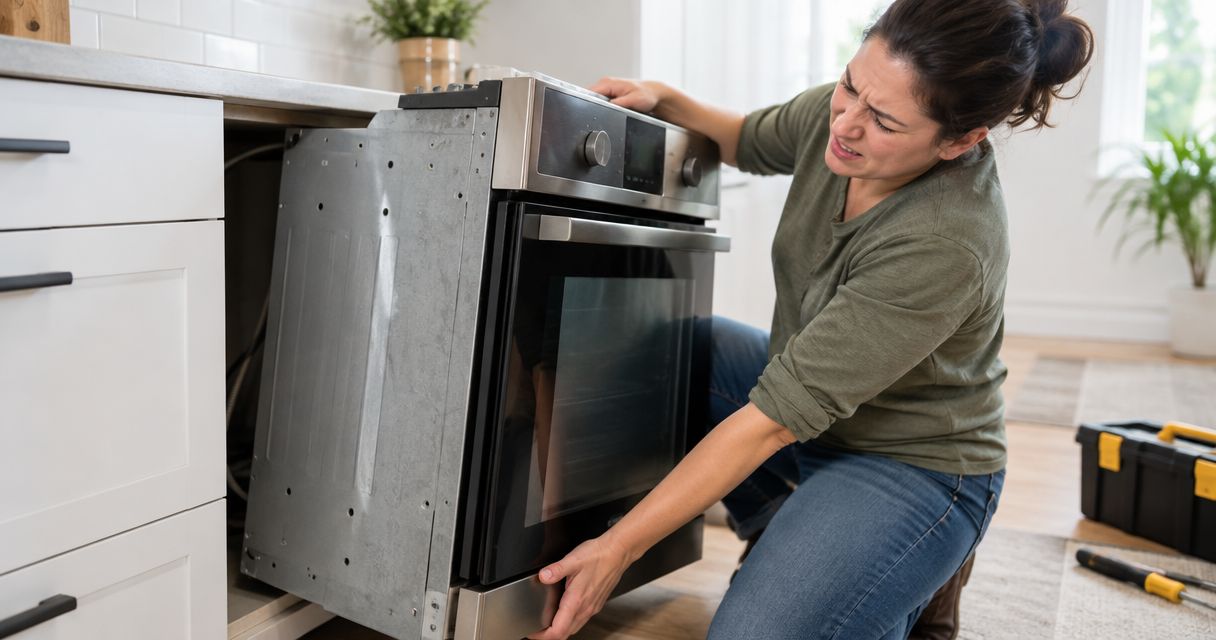
A gas range combines an appliance move with a fuel connection that needs qualified attention. It can also have anti-tip hardware that affects how it is released. Moving the range without understanding either connection is the wrong starting point.
Arrange qualified gas disconnection and safe treatment of the remaining supply connection before hauling. Keep that responsibility separate from the loading appointment unless the provider explicitly confirms it is included.
Gas range advantages for planning:
- The model manual explains the appliance's installation arrangement.
- A photo of the surrounding space helps plan access.
- Separating gas work from hauling makes the handoff clear.
Gas range removal concerns:
- Pulling the appliance can strain an attached gas connection.
- Anti-tip hardware must be handled according to the installation instructions.
Best for: Scheduling qualified gas work before the removal crew arrives.
Verdict: Skip DIY gas disconnection; arrange qualified help before movement.
4. Built-in dishwasher: hardest for hidden connections
A dishwasher can look like a small, straightforward appliance while remaining attached to the counter or adjacent cabinetry. It also connects to water and drainage, and some installations use a hardwired electrical connection rather than an accessible plug.
Check how the appliance is powered and secured before planning removal. Plumbing preparation and electrical isolation need to be completed safely, with qualified help where required.
Dishwasher advantages for planning:
- Installation instructions identify fastening and connection details.
- Photos of adjacent plumbing help explain the arrangement.
- Checking the finished floor helps identify extraction obstacles.
Dishwasher removal concerns:
- Hidden fasteners or attached hoses prevent straightforward removal.
- Flooring installed around the appliance can complicate extraction.
Best for: Identifying every connection and attachment before pulling the appliance out.
Verdict: Hold until plumbing, power, fasteners, and floor clearance are checked.
5. Freestanding refrigerator: hardest for a bulky exit route
A freestanding refrigerator avoids some cabinet-release work, but its shape still creates clearance problems. Handles, doors, and turns all matter. Models connected to an ice maker or water dispenser also need water-line preparation.
Measure the appliance as it will actually move through the property. If removing doors is proposed, confirm the model instructions and agree who will do that work; do not assume the hauling appointment includes it.
Freestanding refrigerator advantages for planning:
- Visible exterior dimensions help evaluate the route.
- Accessible model information supports preparation decisions.
- Route photos show turns that measurements alone miss.
Freestanding refrigerator removal concerns:
- A doorway measurement does not account for every turn.
- Water connections and loose doors need attention before movement.
Best for: Checking clearance from the kitchen all the way to the loading location.
Verdict: Hold until the complete exit route fits the planned appliance configuration.
6. Washing machine: hardest for water-management preparation
A washing machine can retain water after normal use. Supply hoses and a drain hose also need preparation before the appliance moves. Disconnecting without a plan for residual water creates an avoidable mess.
Consult the model instructions for transport preparation. Moving an appliance for reuse is different from hauling it away for disposal, so tell the provider which outcome you need.
Washing machine advantages for planning:
- Hose locations help identify the preparation work.
- Model instructions explain transport requirements.
- A clear destination helps distinguish relocation from removal.
Washing machine removal concerns:
- Retained water can escape during handling.
- Awkward access behind the machine complicates hose preparation.
Best for: Managing water and confirming transport requirements before loading.
Verdict: Hold until the hoses, residual water, and handling plan are addressed.
7. Electric dryer: simplest here when connections are accessible
An electric dryer avoids water-supply preparation, but it still needs electrical and vent disconnection. A visible plug makes the installation easier to understand; a hardwired installation needs a different approach.
Inspect the exhaust connection before movement. Do not drag the dryer forward while an attached duct is still resisting, and do not treat a stacked electric dryer as a standalone removal.
Electric dryer advantages for planning:
- There are no water-supply hoses to prepare.
- An accessible plug helps clarify the power connection.
- Visible vent access makes preparation easier to describe.
Electric dryer removal concerns:
- Attached ductwork can be damaged by pulling.
- Stacking or restricted access changes the removal plan.
Best for: A standalone appliance with accessible power, venting, and a clear route.
Verdict: Proceed with hauling only after power and vent connections are safely released.
How this ranking works
Built-in refrigerators rank first because installation release adds work before handling begins. Stacked laundry follows because configuration and separation complicate the job. Gas ranges rank above several bulkier appliances because utility-disconnection responsibility needs to be settled first.
The lower rankings do not mean safe to move alone. Stairs, tight turns, and inaccessible connections can move any appliance to the top of your difficulty list.
Prepare an estimate that covers the real job
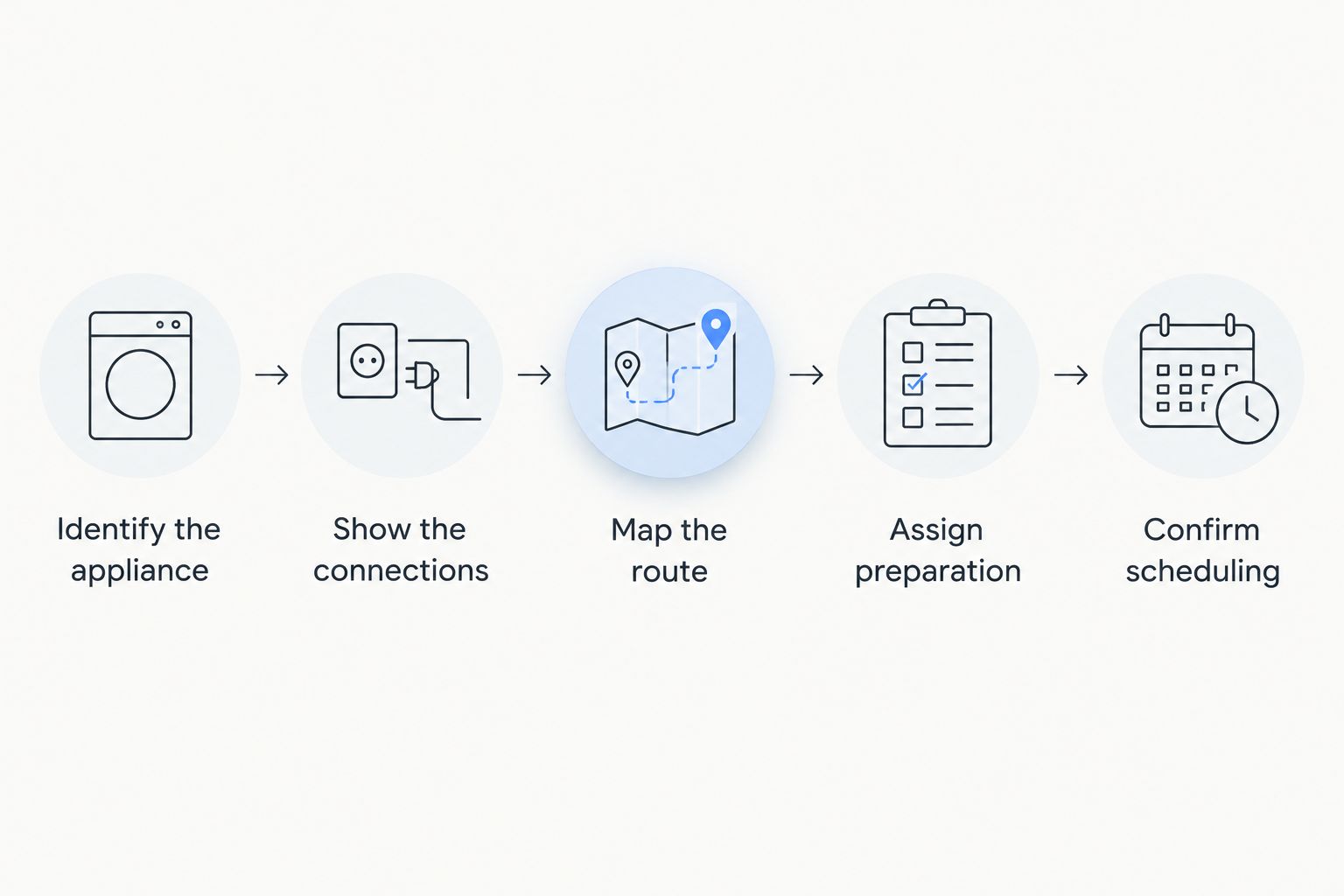
For a Lakeland or Polk County appliance removal in 2026, give the provider enough information to separate hauling from preparation. Use this sequence before requesting a time slot:
- Identify the appliance. Record the type and model, and state whether it is built in, stacked, or freestanding.
- Show the connections. Send accessible photos without pulling an attached appliance out just to get a picture.
- Map the route. Describe the floor level, stairs, tight turns, thresholds, and parking access.
- Assign preparation. Confirm who handles disconnection, installation release, or approved separation.
- Confirm scheduling. Explain your deadline and ask what appointment is available.
Send 3 photos as a useful starting set: the appliance front, accessible connections, and the tightest part of the exit route. Add 2 measurements: the appliance's widest point and the narrowest doorway. Those are preparation suggestions, not a substitute for checking the complete route.
Keep 1 clear route between the appliance and the exit. Move small obstacles only when doing so is safe; do not attempt heavy lifting just to make the estimate photos look ready.
Liftloadhaul offers same-day or next-day service, but that is not a guaranteed appointment. Request a free estimate, send photos, or call (352) 835-2694 to discuss the appliance, access, and preparation required.
Which removal should you arrange first?
Arrange connection and installation work before hauling. Start with built-in refrigerators, stacked laundry, gas ranges, and hardwired dishwashers when coordinating several appliances, because each needs a clear preparation handoff.
For disconnected freestanding appliances, focus on the exit route instead. Tell the provider about stairs and turns before the appointment—not when the appliance reaches them.
FAQ
What are the hardest appliances to remove?
Built-in refrigerators, stacked laundry units, gas ranges, and built-in dishwashers require the most preparation in this ranking. Installation, connections, and the exit route determine the difficulty of your actual job.
Is a refrigerator harder to remove than a washing machine?
A built-in refrigerator generally involves more installation-release work than a freestanding washing machine. A washing machine upstairs or behind a tight turn can still present the harder handling job.
Can I disconnect a gas range myself before hauling?
Arrange qualified gas disconnection rather than treating it as routine hauling preparation. Confirm who will safely address the remaining gas supply connection before scheduling removal.
Do stacked washers and dryers come apart for removal?
Separate stacked appliances and integrated laundry towers have different removal requirements. Identify the model and follow its instructions before planning separation.
Does appliance hauling include plumbing and electrical work?
Do not assume appliance hauling includes plumbing, gas, or hardwired electrical work. Confirm those responsibilities with the provider before booking, and arrange qualified help for work outside the hauling scope.
What photos should I send for an appliance removal estimate?
Send photos of the appliance, accessible connections, and the tightest part of the exit route. Include stairs, turns, or restricted parking when they affect access, without moving a connected appliance for a better picture.
Can Liftloadhaul remove appliances in Lakeland and Polk County?
Liftloadhaul provides residential and commercial appliance hauling for customers in Lakeland and across Polk County. Request a free estimate and describe the appliance, connections, and access before confirming the job.
One last thing
The hardest appliance to remove is not always the largest—it is the one still attached when someone starts pulling. Before your 2026 removal appointment, ask one direct question: who is responsible for making this appliance ready to move? A clear answer prevents a hauling visit from becoming an unplanned disconnection job.